3 hr 30 min
Thai Cooking Class with Market Visit & Herb Garden
- Entry ticket
- Mobile voucher
- Valid same day
- Free cancellation
Thai Cooking Class Chiang Mai Farm — Market Tours & Organic Gardens
Master northern Thai recipes from seed to plate, hands-on with local chefs
Compare fares, pick the fit — all bookings are mobile-voucher and eligible for free cancellation where shown.
3 hr 30 min
7 hr
4 hr
Selecting the right thai cooking class chiang mai farm experience depends on whether you prefer a comprehensive full-day immersion or a focused half-day session. These farm-to-table culinary tours offer varying degrees of engagement with organic herb gardens and local market traditions.
|
Top pick Half-Day Class Morning or Afternoon |
Full-Day Class Extended Culinary Immersion | |
|---|---|---|
| Price | 1,000 THB | 1,500 THB |
| Session Duration | Half-day | Full-day |
| Market Tour Included | ||
| Farm Visit Included | ||
| Hands-on Cooking | 3 dishes | 5-6 dishes |
| Best for | First-timers with limited time | Deep culinary enthusiasts |
| See tickets & prices |
Verdict: Choose the half-day thai cooking class chiang mai farm tour for a quick, essential introduction, or the full-day option for a more leisurely pace through the organic farm.
Worth it for hands-on culinary travelers
A thai cooking class chiang mai farm experience costs around 1,000 THB and delivers what market-only classes cannot: direct ingredient harvesting from organic gardens. You pick Thai basil, lemongrass, and galangal minutes before they hit your wok, then prepare four to six dishes under instructor guidance. The half-day format includes morning market visits in some packages, though the real differentiator is the farm component—you learn ingredient identification in situ rather than buying pre-selected produce. Classes run in small groups, ensuring personalized feedback on knife skills and curry paste grinding. The educational payoff suits travelers who want replicable skills over passive tasting; you leave with recipe cards and muscle memory for pad thai or green curry. For culinary enthusiasts willing to commit a half-day, the farm immersion justifies the cost. Casual eaters seeking only a meal may find the instruction-heavy format excessive.
Bottom line: Thai cooking class chiang mai farm tours transform culinary theory into tactile, garden-to-plate education that market visits alone cannot replicate.
They offer comparable farm-to-table immersion; visitors seeking a well-documented recipe structure often prefer Grandma's, while those prioritizing the legacy of the original organic farm experience choose the thai cooking class chiang mai farm.
|
Top pick Thai Cooking Class |
Grandma's Home Cooking | |
|---|---|---|
| Market tour included | ||
| Farm-to-table access | Organic garden | Organic garden & farm |
| Cooking stations | Individual | Individual |
| Instruction language | English | English & Chinese |
| Hotel pickup | Available | Available |
| Typical dishes | 6 dishes | 4–5 dishes |
| Duration | Half-day | Half-day |
| Standard fee | 1,000 THB (summer) | 25–40 USD (summer) |
| See tickets & prices |
Verdict: The thai cooking class chiang mai farm tours provide a classic, established educational environment, whereas the alternative thai cooking class chiang mai farm tickets are ideal for travelers who want a highly social, family-oriented atmosphere with additional animal-interaction activities.
Hand-picked experiences loved by thousands of travelers
3 hours 30 minutes
Free Cancellation
Master authentic Thai dishes at a family-run cooking school after exploring a vibrant local market.
6 hours
Free Cancellation
Master authentic Thai recipes at a countryside farm with market tour, hands-on instruction, and recipe book
5 hours
Free Cancellation
Master seven authentic Thai recipes at a scenic lakeside kitchen, then cool off with a swim in the canyon.
6 hours
Free Cancellation
Master authentic Thai recipes at an organic farm, from market selection to cooking your own feast
4.5 hours
Free Cancellation
Master authentic Thai recipes at your own station after exploring a local market and organic garden
8 hours
Free Cancellation
Master authentic Thai recipes at a peaceful countryside farm with market visit and seasonal fruit picking
9 hours
Free Cancellation
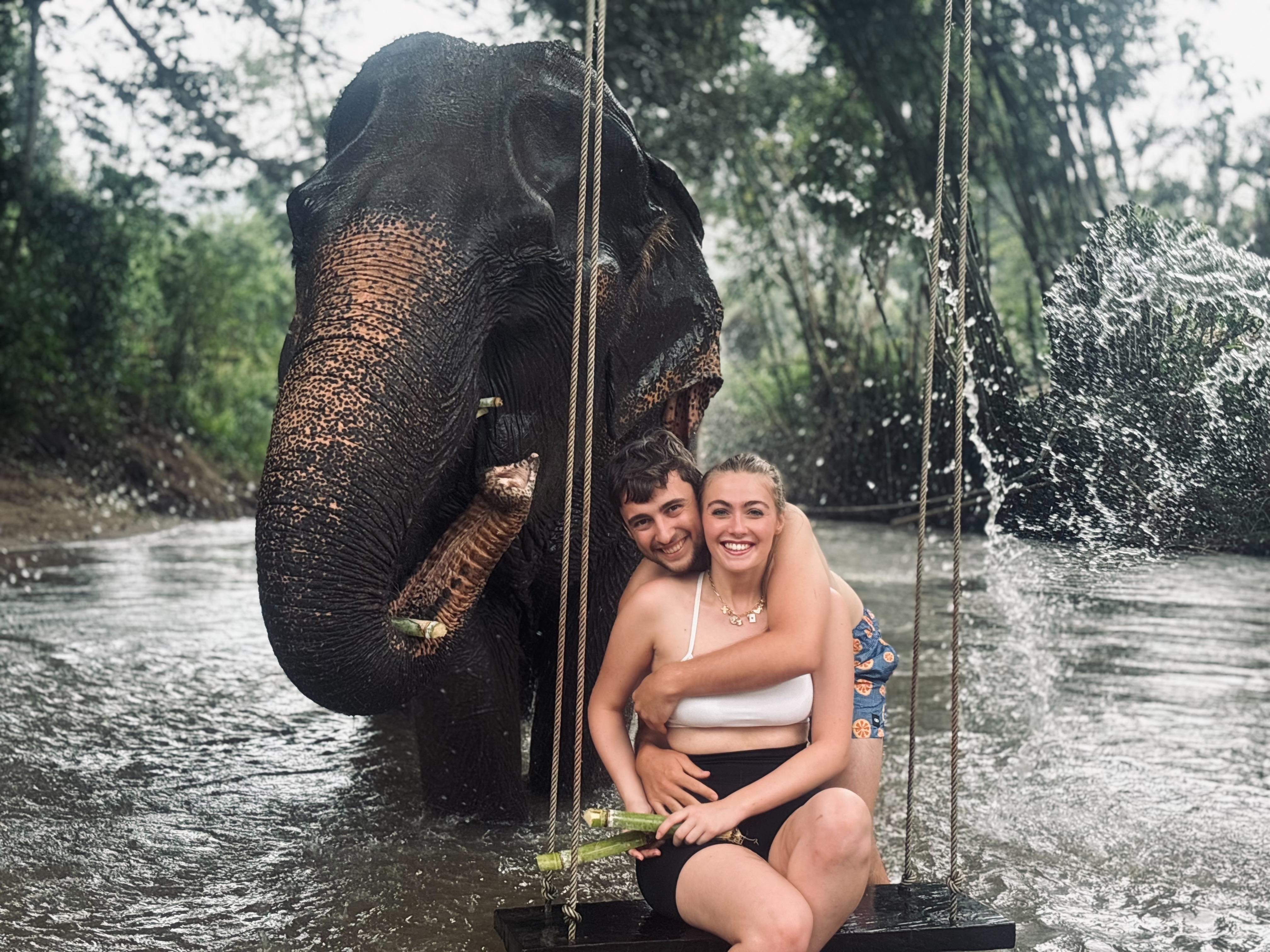
Cook authentic Thai dishes with a local chef, then meet rescued elephants in their forest home
13 hours
Free Cancellation
Scale limestone cascades, explore a sacred temple, then master authentic Thai recipes at a farm cooking school
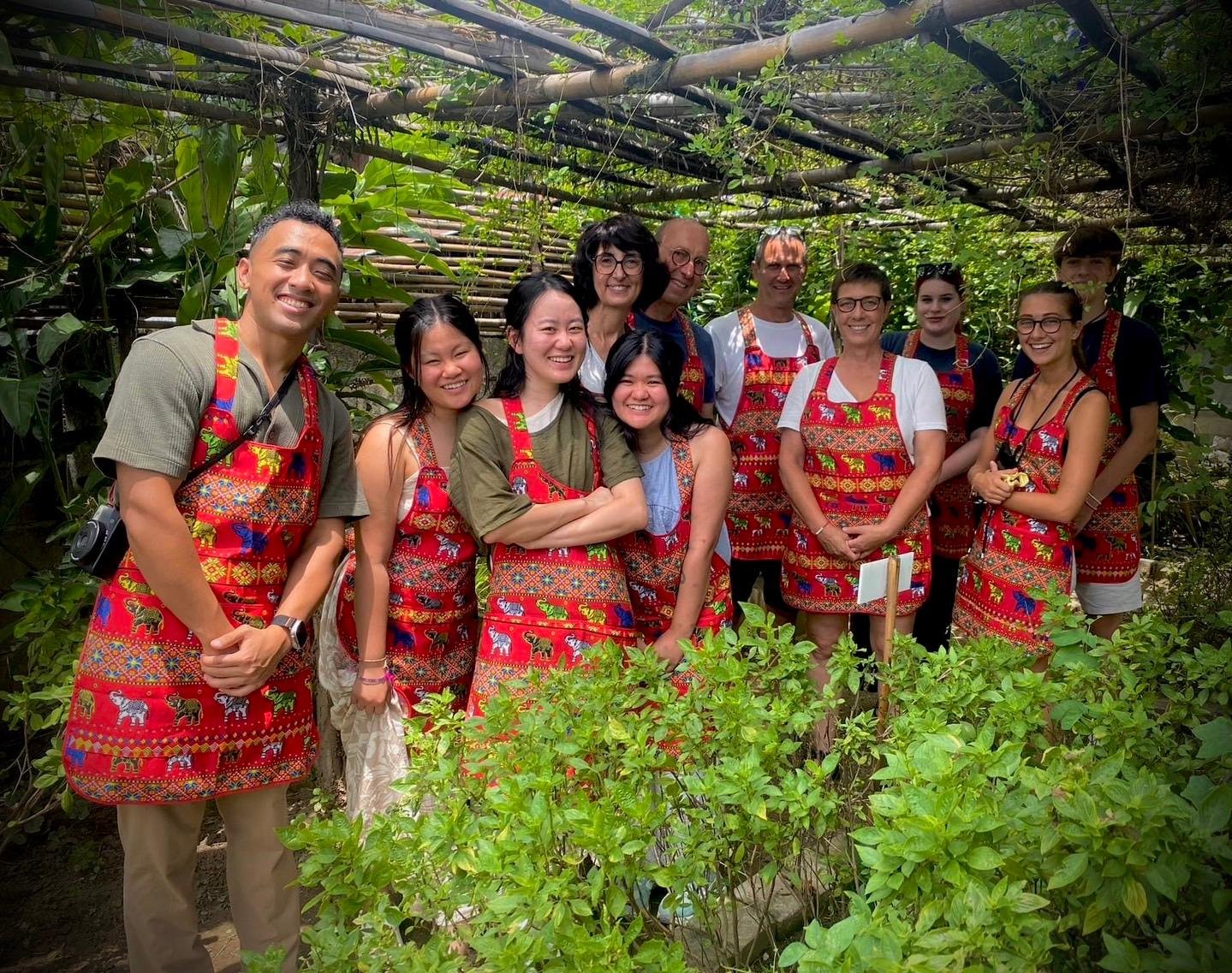
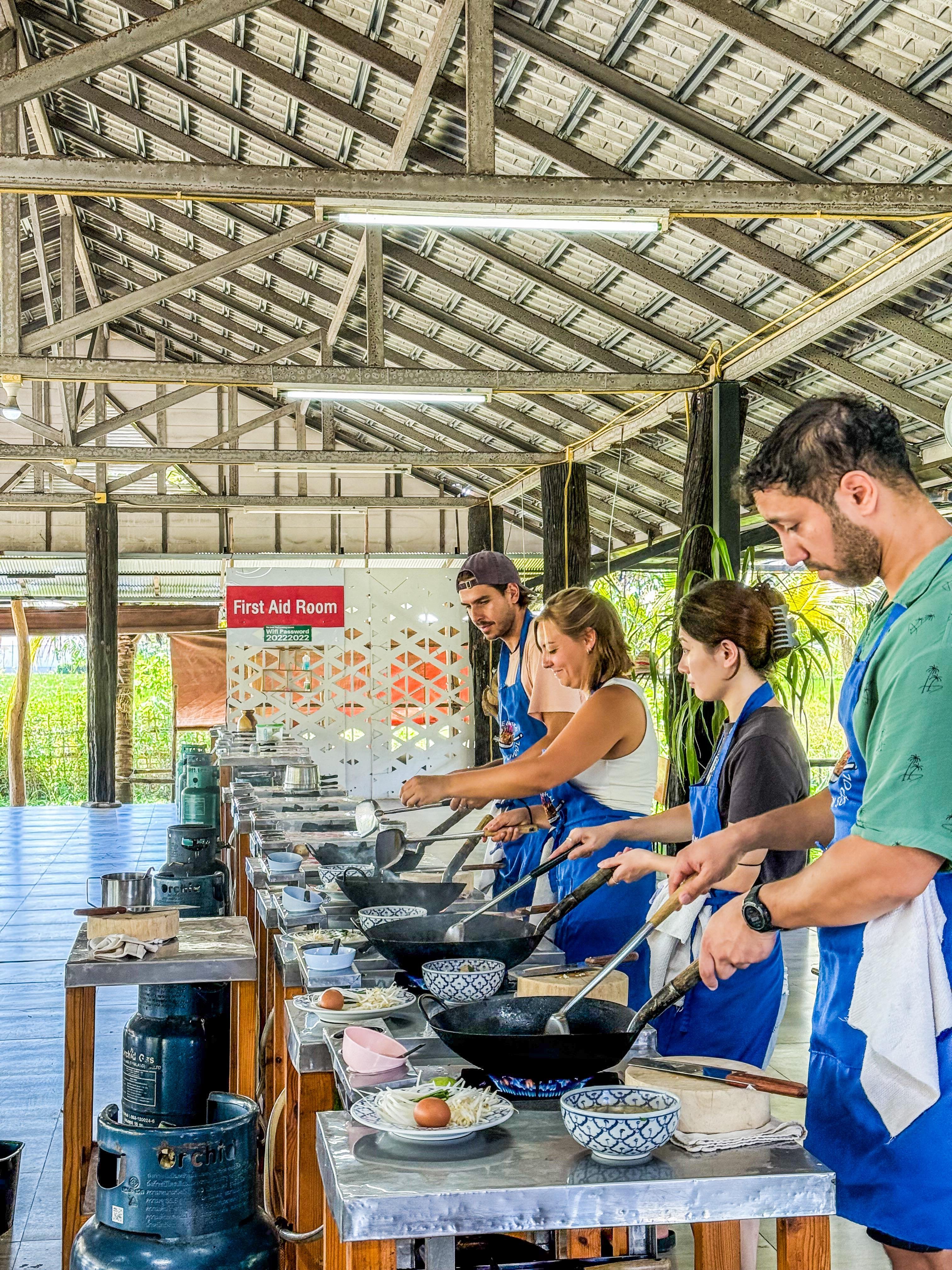
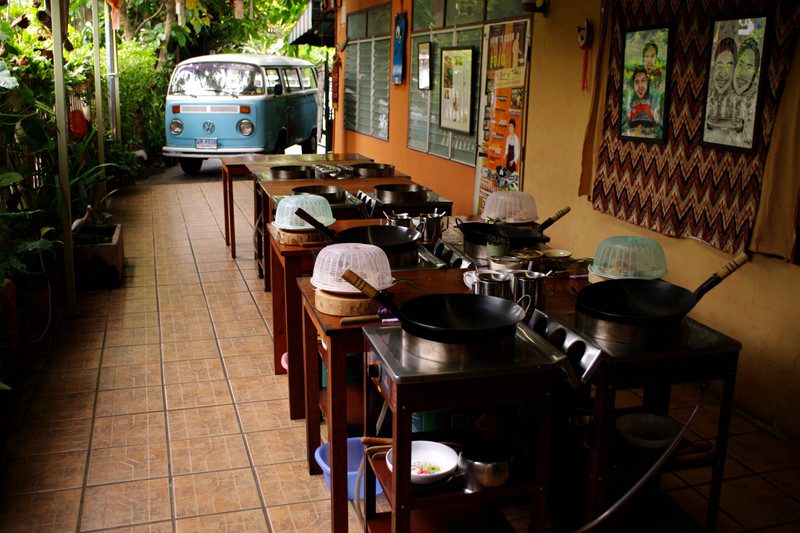
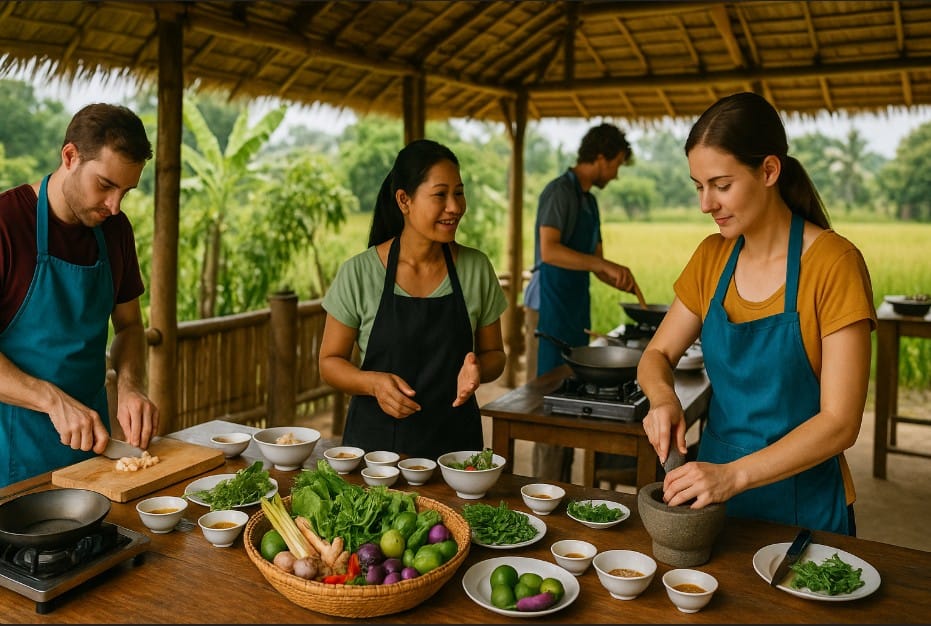
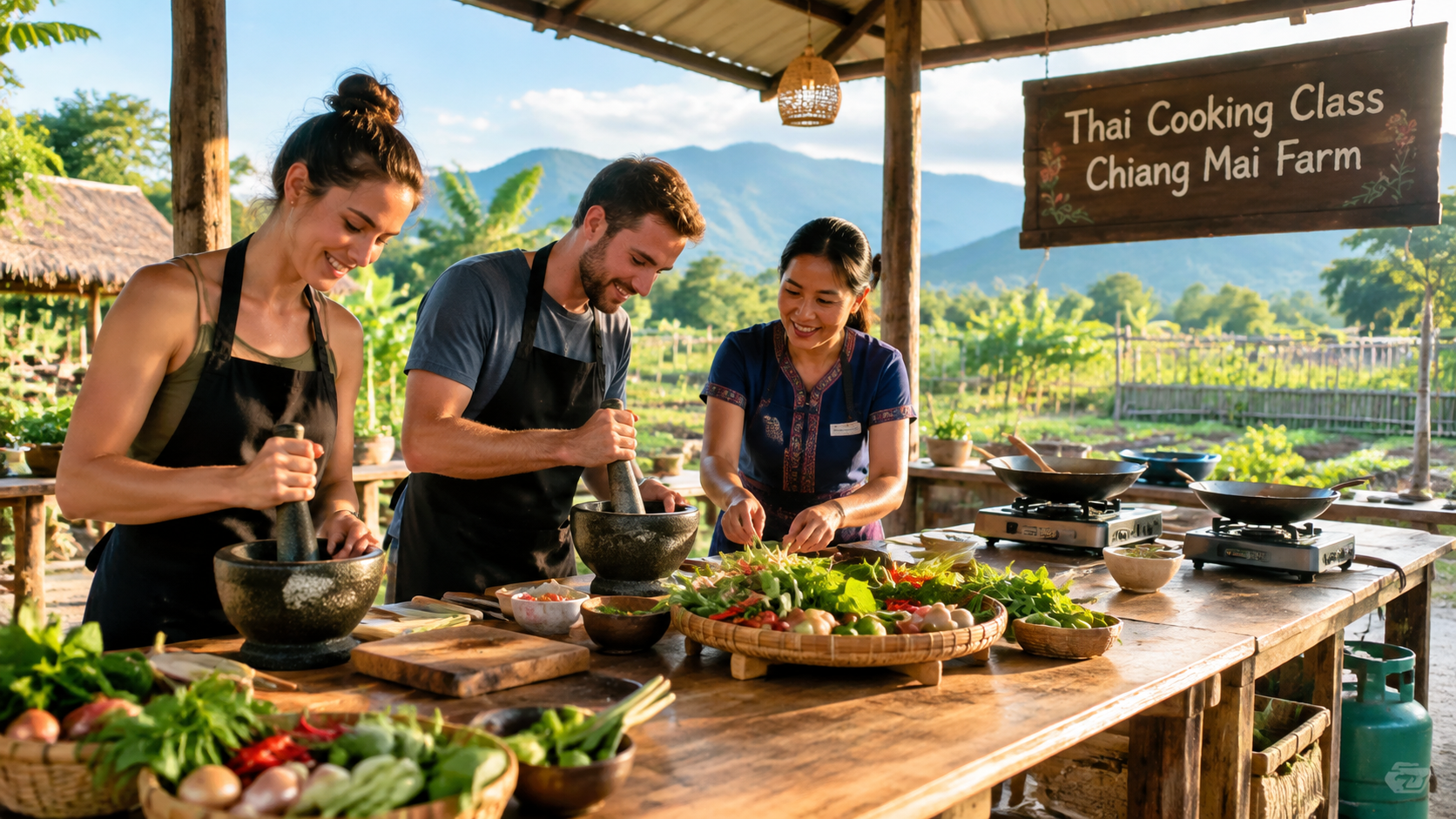
You arrive at the farm by 9:00, greeted by your instructor in the open-air pavilion where wooden prep stations face rows of lemongrass and kaffir lime trees.
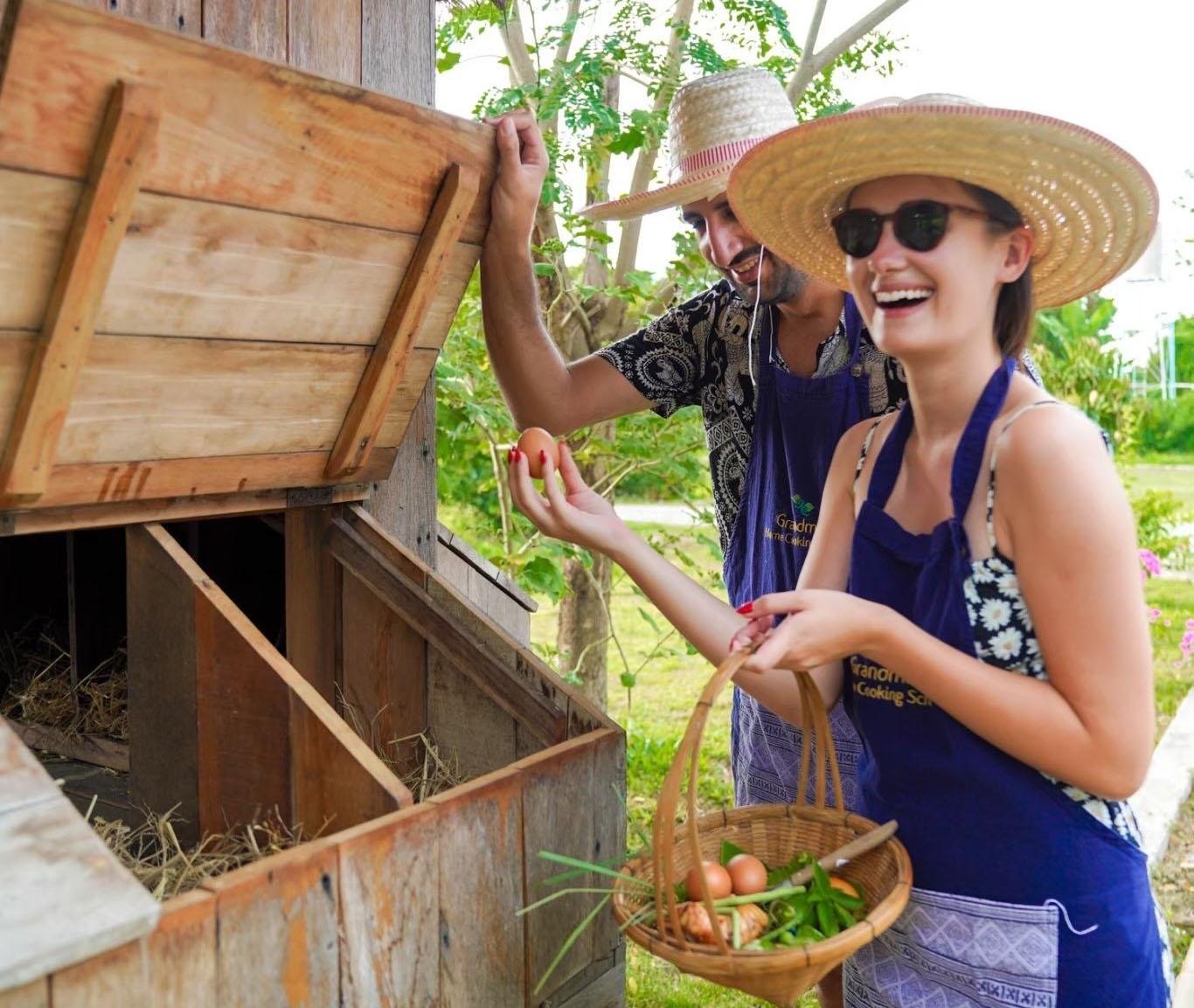
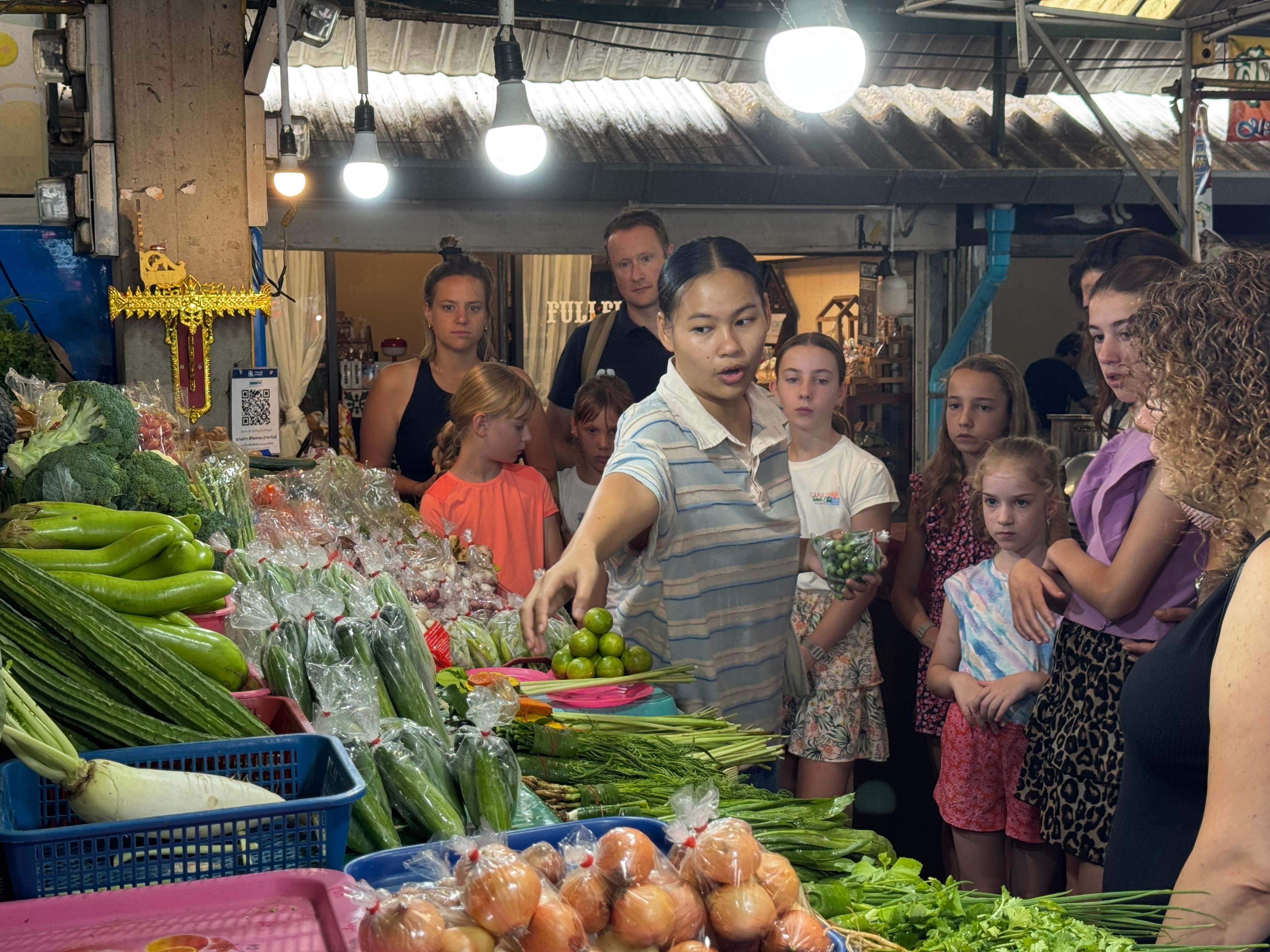
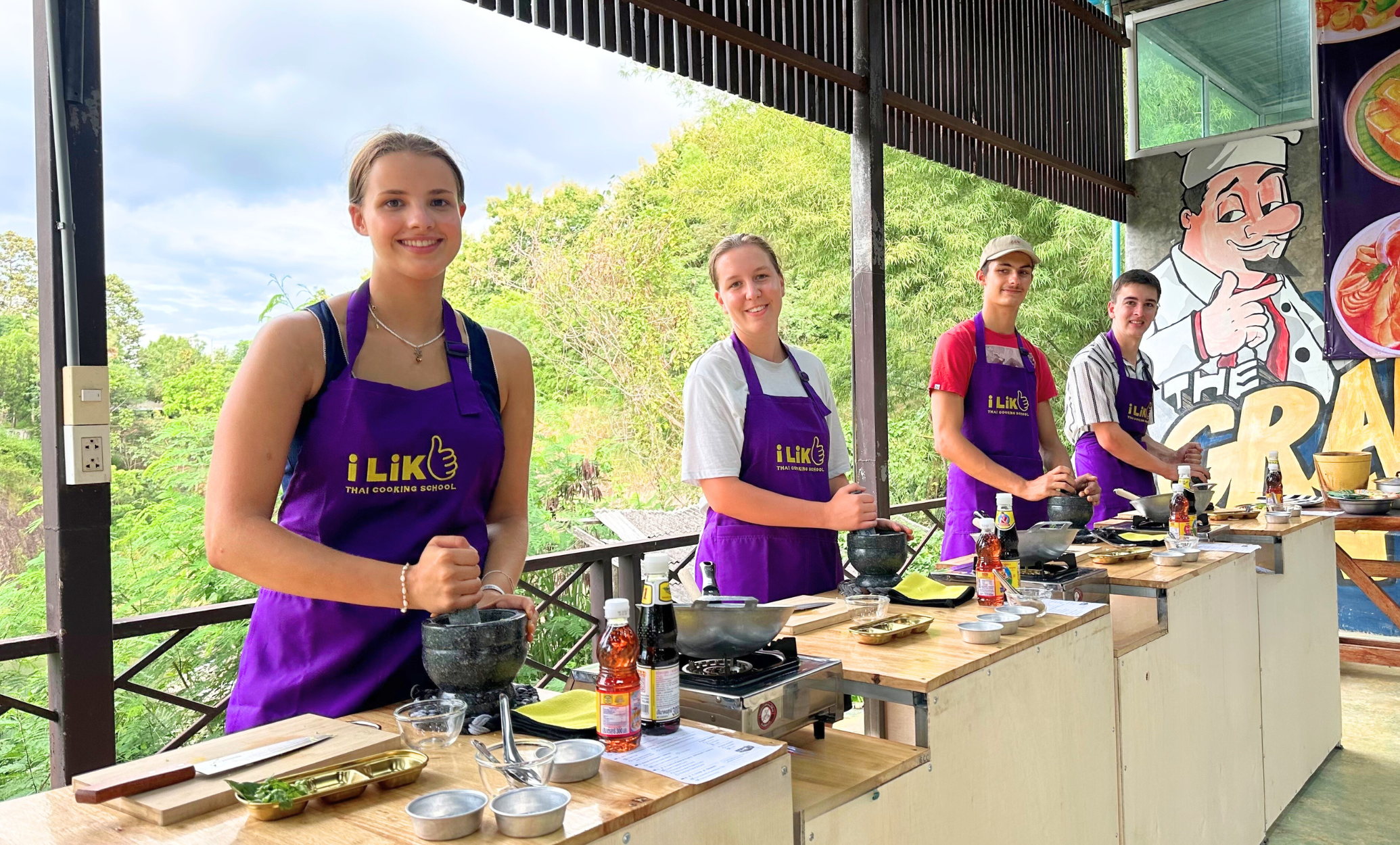
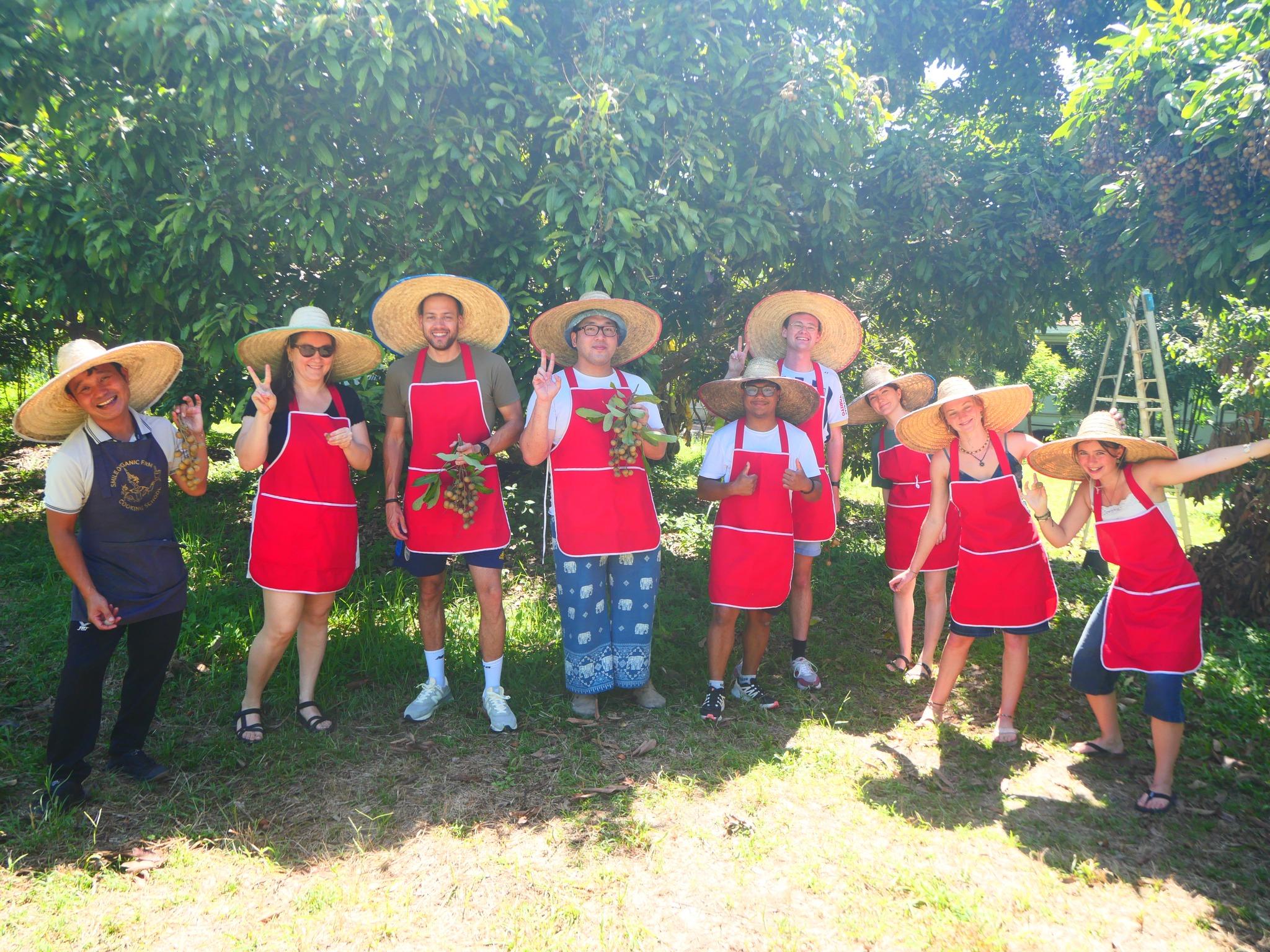
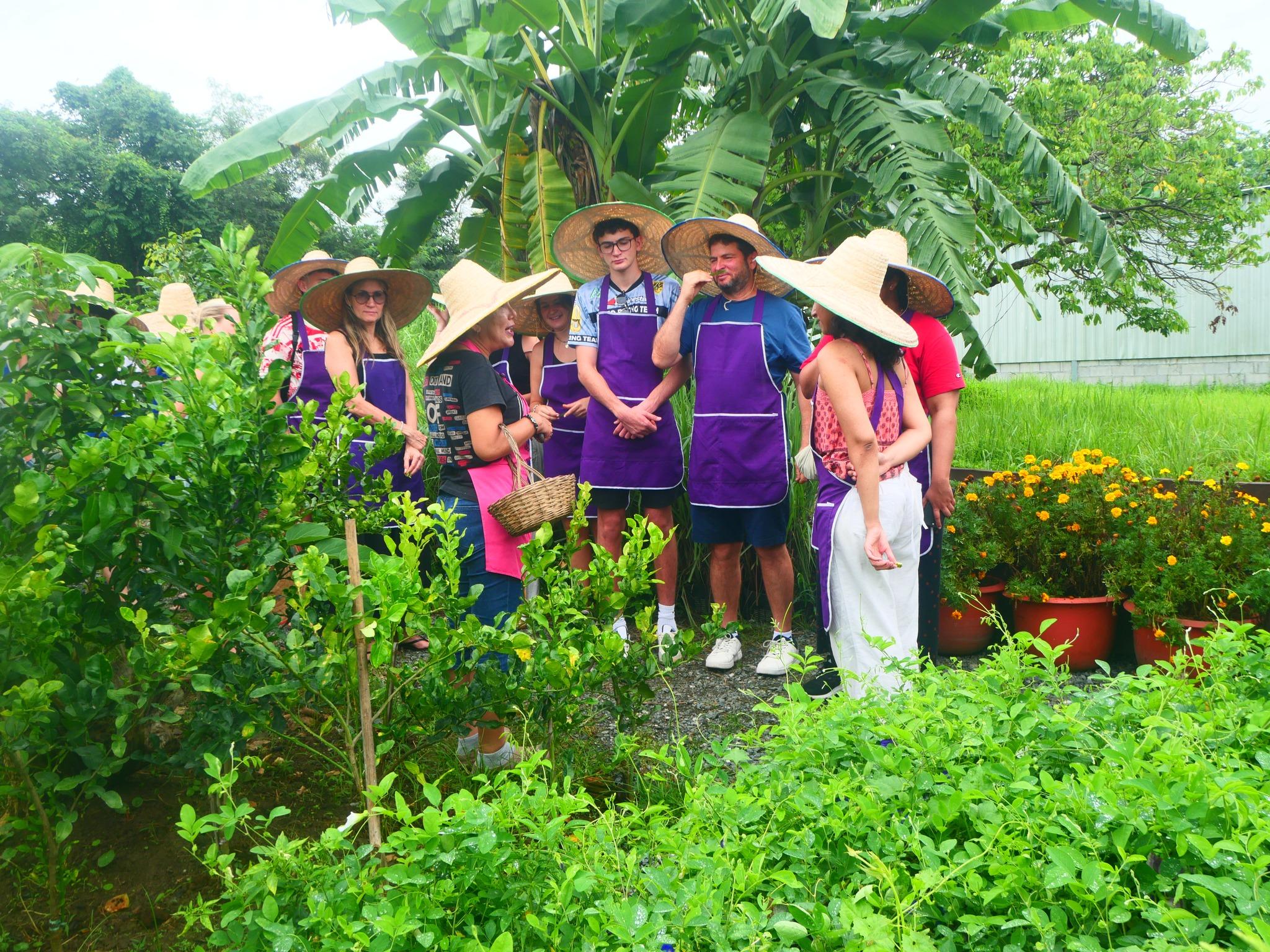
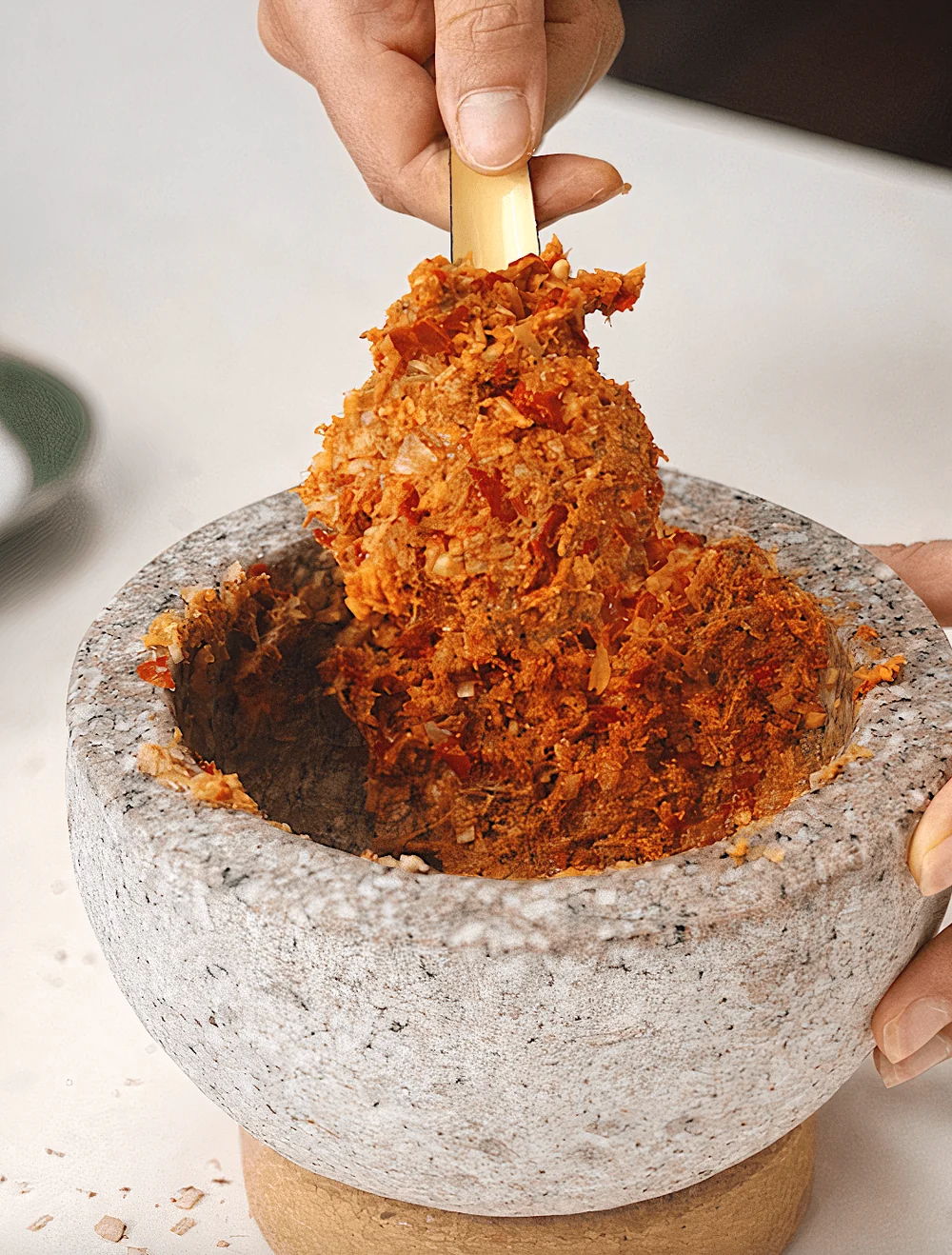
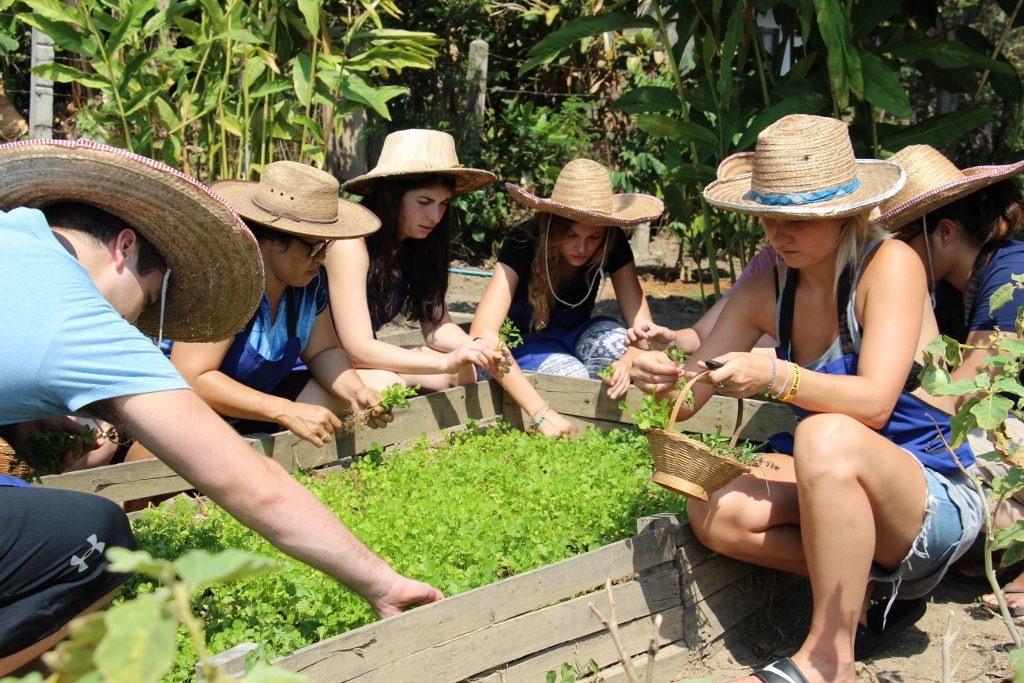
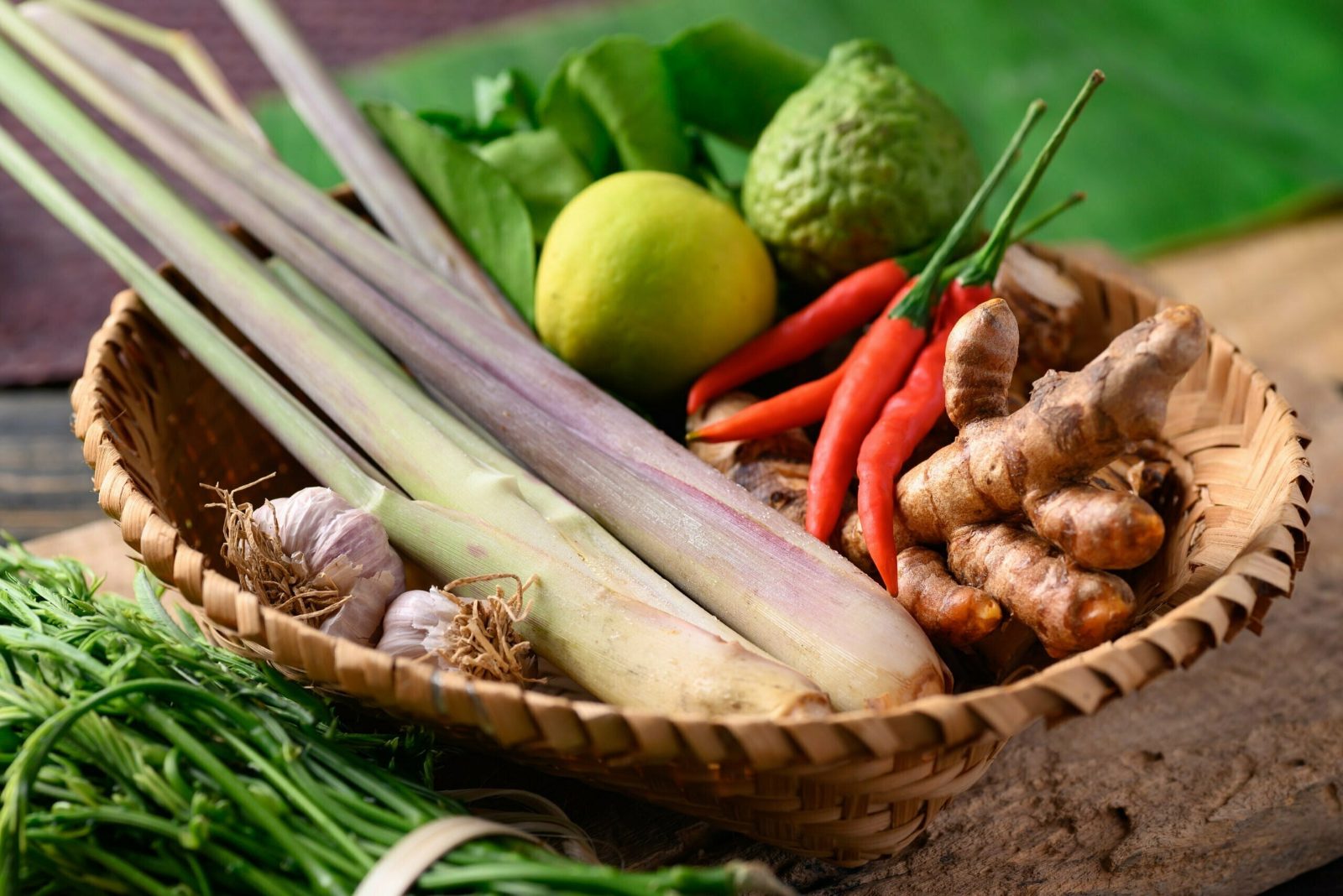
The morning begins at a nearby market — Warorot or a neighborhood talat — where you navigate stalls selling fresh turmeric root, banana blossoms, and bundles of morning glory, learning to identify ripe papayas by sound and select the correct noodle width for pad see ew. Back at the farm, you harvest your own ingredients: snipping Thai basil, uprooting galangal, picking chilies straight from the plant. Your instructor demonstrates paste-making first, showing you how to pound shallots, garlic, and dried chilies in a granite mortar until the mixture turns silky, then taste-testing for balance before you replicate the process at your station.
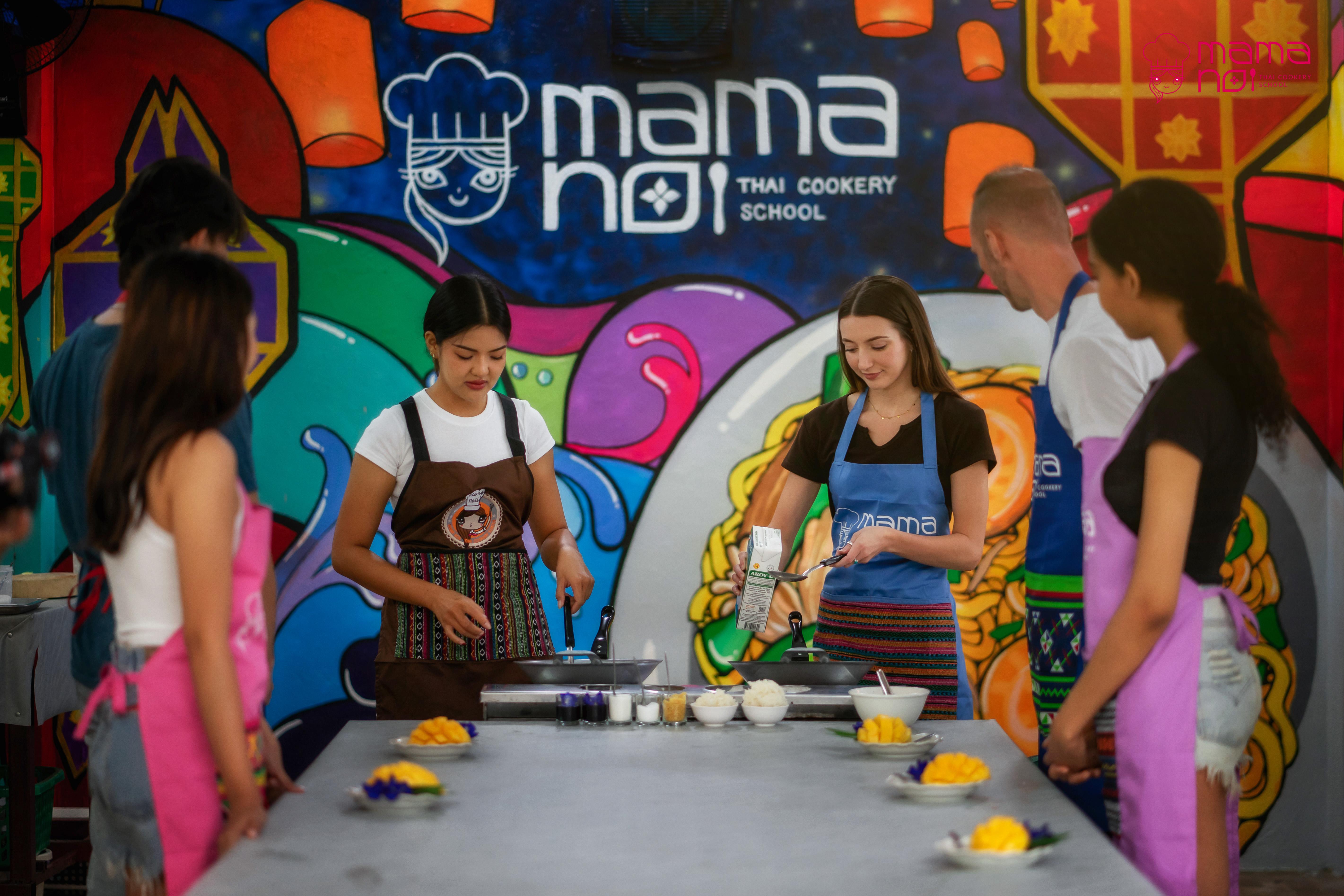
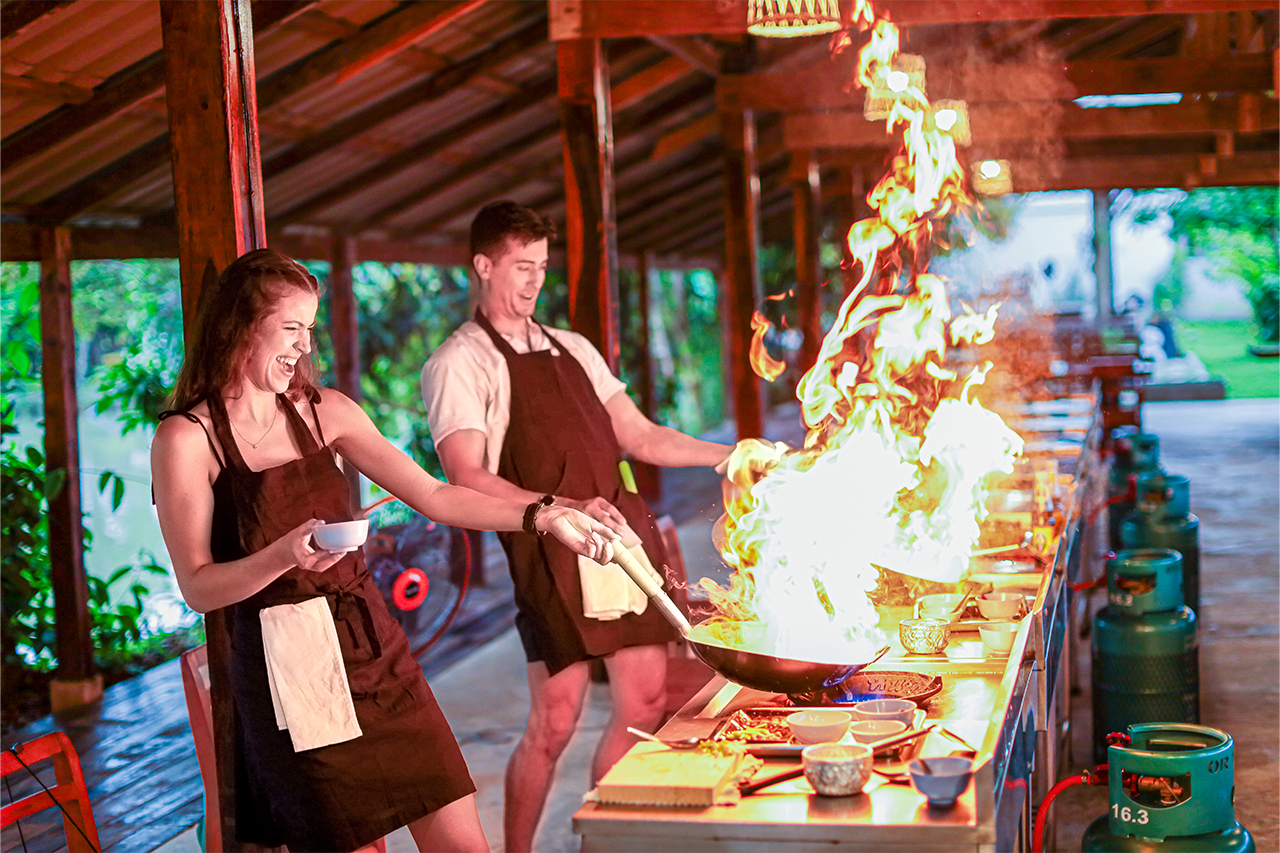
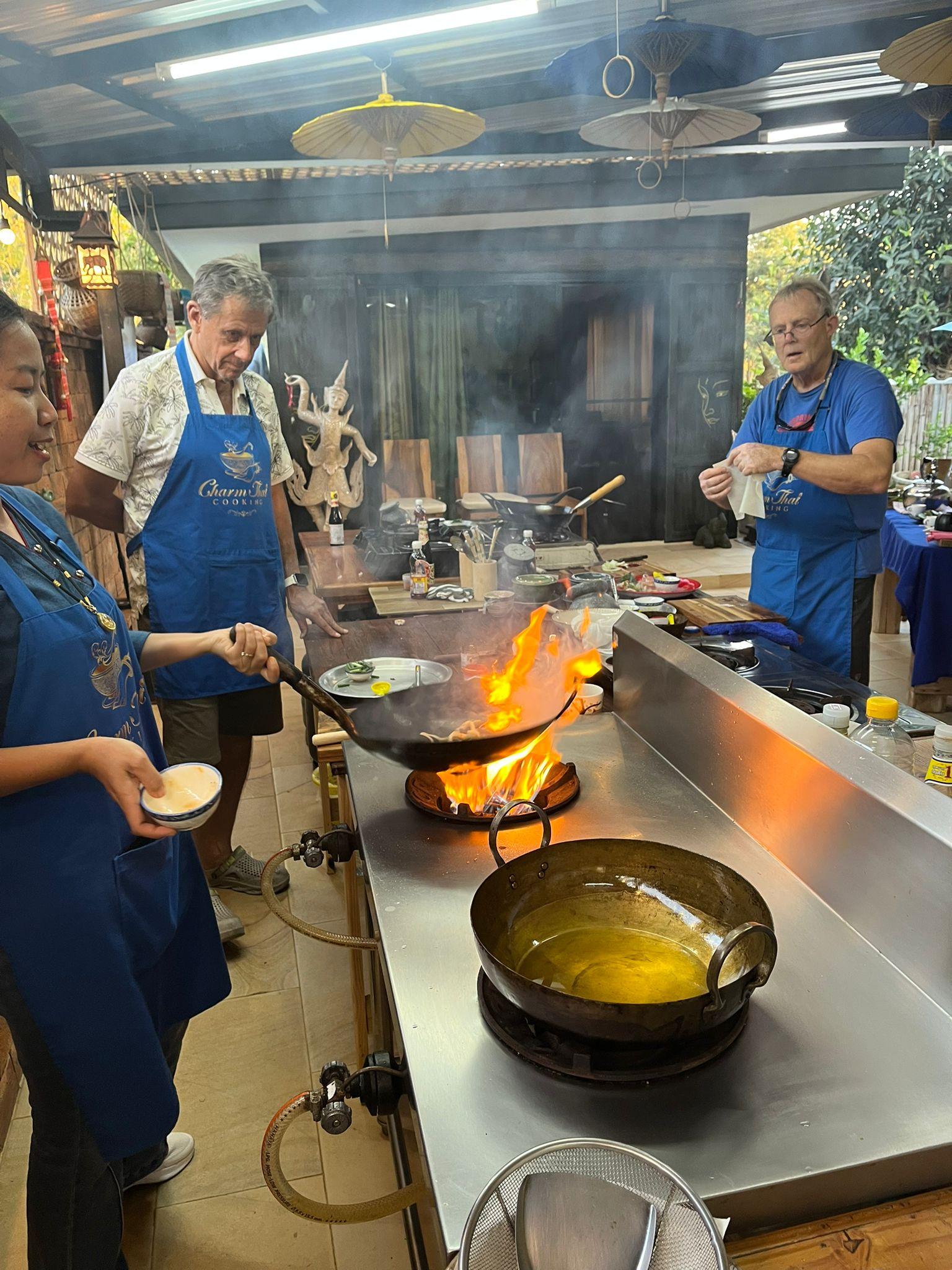
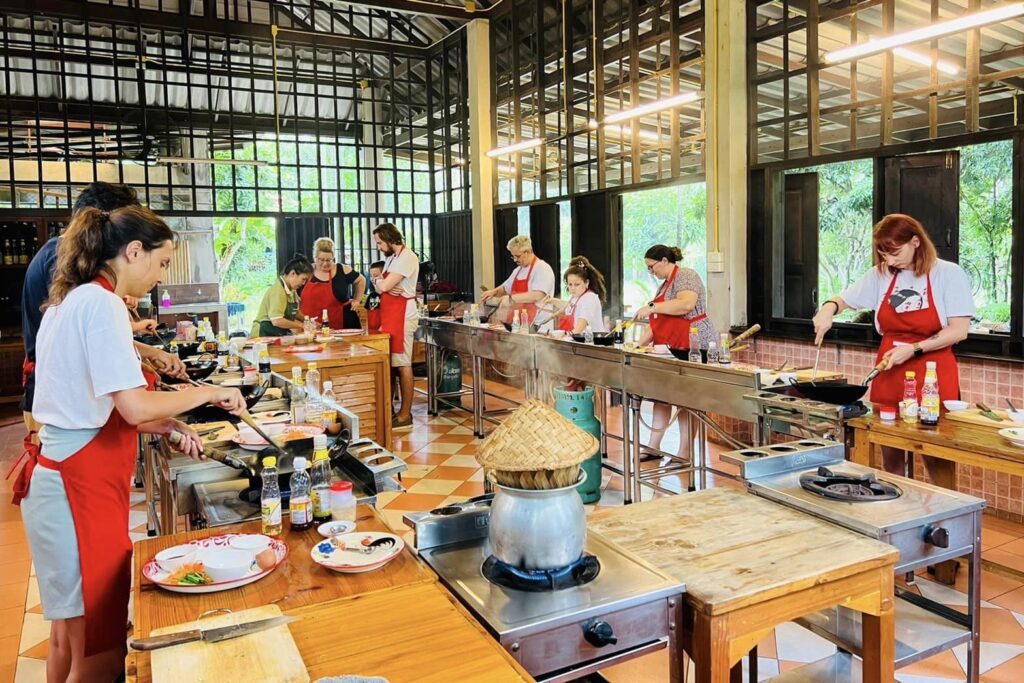
The cooking sequence follows a logical progression — stir-fry, curry, soup — with the instructor circulating to adjust your wok heat, correct your knife angle, or add a pinch of palm sugar when your pad Thai skews too sour. You make four to six dishes over three hours, working in small groups of eight to twelve. The session ends at a communal table where you eat everything you prepared, comparing your green curry's heat level with your neighbor's and consulting the laminated recipe cards you'll take home. The farm sells jarred curry pastes and organic vegetables at a small shop near the exit, and many students leave with bags of ingredients to attempt the menu again within the week.
All the details about your upcoming adventure in one place
Chiang Mai's farm-based cooking schools emerged in the early 2000s when a cluster of family-run agricultural properties in the Mae Rim and San Kamphaeng valleys began opening their herb gardens and kitchens to travelers seeking alternatives to hotel demonstration classes.
The model paired morning market visits with afternoon sessions in open-air salas surrounded by organic basil, lemongrass, and galangal plots, allowing participants to harvest ingredients minutes before cooking. By 2010, the format had become the region's signature culinary experience, attracting over 80,000 visitors annually and generating a network of certified instructors trained in both northern Thai recipes and sustainable farming practices.
Northern Thai cuisine differs markedly from the central plains repertoire served in Bangkok. Sticky rice replaces jasmine as the staple. Turmeric and ginger dominate over palm sugar. The signature dishes — khao soi, sai ua, nam prik ong — evolved from centuries of Lanna Kingdom trade with Burma and Yunnan, producing a flavor profile that favors earthy, herbaceous notes over the sweet-sour-spicy trinity of southern cooking. Thai cooking class Chiang Mai farm programs preserve these distinctions, teaching participants to grind curry pastes with granite mortars, balance fermented soybean sauces, and recognize the sixteen varieties of Thai basil by scent alone. The curriculum typically covers five to seven dishes per session, ranging from foundational techniques like stir-frying pad Thai to advanced preparations such as hang lay curry, a slow-braised pork dish that requires toasting whole spices and tempering tamarind paste over low heat.
The agricultural component serves both pedagogical and conservation purposes. Many schools maintain seed banks for heirloom vegetable varieties — round Thai eggplants, slender winged beans, bitter melon cultivars — that disappeared from commercial markets after industrial agriculture shifted to monoculture cash crops in the 1980s. Students tour these plots before class, learning to distinguish bird's eye chilies from prik kee noo suan and observing how galangal rhizomes develop underground networks that allow a single plant to produce shoots for decades. The experience concludes with a communal meal where participants eat their own dishes, receive printed recipe cards, and often purchase organic produce or house-made curry pastes to replicate the menu at home. The half-day format, operating daily from 9:00 to 21:00 with morning and afternoon cohorts, accommodates both serious home cooks and casual tourists, maintaining a student-to-instructor ratio that allows individual feedback during knife work and wok technique drills.
Sixteen varieties of Thai basil, each with a distinct role in northern Lanna cooking.
Wear comfortable, modest clothing suitable for a farm environment. Closed-toe shoes are recommended for kitchen safety and garden tours.
Small daypacks are acceptable for your belongings. Security lockers are generally provided at the farm during your session.
Photography is encouraged throughout the market tour and organic garden walk. Capture your culinary creations at your private cooking station.
Children are welcome to participate in these hands-on culinary workshops. Ensure young cooks are supervised during the meal preparation phase.
The farm terrain may have uneven paths. Please notify the Thai Cooking Class team in advance if you require assistance with mobility.
All ingredients for your 6-course meal are included. Dietary restrictions should be communicated to your instructor before the start of the thai cooking class chiang mai farm.
Opening Hours
09:00–21:00
Address
Chiang Mai, Thailand
Accessibility
Inquire for specific farm terrain mobility
Best arrival window
09:00–15:30
Storage
Secure area available for personal items
Navigation
Confirm pickup location upon booking
Taxi · 30-45 mins · 200-400 THB
Direct transfer is the most efficient way to reach the farm location. Confirm the rate before departure from the city center.
Minivan · 45-60 mins · Included
Included with most bookings for a stress-free thai cooking class chiang mai farm tour. Pickup services cover central districts.
Full refunds are typically available if cancelled within the operator's specified window. Note that the standard 1,000 THB per person fee applies to half-day bookings.
Recommended time
Half a day
Planning your visit to a thai cooking class chiang mai farm requires selecting between morning and afternoon sessions to suit your schedule. Morning thai cooking class chiang mai farm tours typically incorporate an immersive harvest experience, while afternoon sessions prioritize direct culinary prep and local ingredients. Guests should aim to arrive within the 09:00–15:30 window to ensure a seamless entry for their booked thai cooking class chiang mai farm tickets. As classes are structured for small groups, congestion remains minimal throughout the day, providing a comfortable environment for your farm-to-table session.
Crowd levels through the day
Weather · crowds · average price — dots go green to amber to red as each metric rises.
September to November offers pleasant temperatures for garden tours. Crowds are moderate, providing an ideal experience for thai cooking class chiang mai farm tours.
Cooler weather from December to February is popular. Book your thai cooking class chiang mai farm tickets well in advance due to high demand.
March to May is warmer, perfect for harvesting seasonal produce. Enjoy a quieter atmosphere during this thai cooking class chiang mai farm visit.
June to August features occasional rain, keeping the farm lush. Experience the authentic farm-to-table process with fewer travelers.
Secure your spot online or via phone at least one week prior to your desired thai cooking class chiang mai farm date.
Review the menu when you register to ensure you get the most out of your thai cooking class chiang mai farm experience.
The organic gardens and market visits are highly photogenic parts of any thai cooking class chiang mai farm tour.
The farm can be cool in the morning but warm during the afternoon, especially during a thai cooking class chiang mai farm session.
Drink plenty of water throughout the day, especially if participating in a summer thai cooking class chiang mai farm workshop.
The chefs are experts in local flora and spices; take advantage of their knowledge during your thai cooking class chiang mai farm visit.
The farm-to-table cooking movement in Chiang Mai emerged from a confluence of royal agricultural projects and preservation efforts in the late twentieth century. In 1979, King Bhumibol Adulyadej established the Royal Project Foundation to support highland farmers, introducing sustainable practices that would later anchor culinary tourism. By the mid-1980s, local families began opening their land to visitors, offering rudimentary cooking demonstrations focused on regional dishes like khao soi and nam prik ong. These early sessions were informal, conducted in home kitchens with ingredients harvested that morning. The 1990s brought structural change. Chiang Mai's Organic Agriculture Cooperative, founded in 1994, standardized chemical-free farming among sixty member households, creating a reliable supply chain for cooking schools. The first dedicated thai cooking class chiang mai farm program opened in 1997 at a family compound in Mae Rim, featuring raised garden beds, outdoor cooking pavilions, and a curriculum built around seasonal harvests. The model spread quickly. By 2002, seventeen farm-based cooking schools operated in the province, each offering half-day sessions priced between 800 and 1,200 baht. The 2004 Indian Ocean tsunami redirected international attention to mainland Southeast Asia, and Chiang Mai saw a 34 percent increase in culinary tourism by 2006. Farm tours integrated ingredient education—participants learned to identify Thai basil varieties, harvest lemongrass, and select ripe tamarind pods before cooking. The format proved resilient through political unrest in 2010 and the 2020 pandemic closures. Today's thai cooking class chiang mai farm tours emphasize organic certification, hands-on preparation of four to six dishes, and market visits. The Royal Project continues to supply heirloom vegetables, including Doi Kham tomatoes and Hmong cabbage, preserving culinary biodiversity while supporting over two thousand farming families across northern Thailand.
King Bhumibol establishes the Royal Project Foundation to promote sustainable highland agriculture in northern Thailand.
Local families in Chiang Mai begin hosting informal cooking demonstrations using produce from their own gardens.
The Chiang Mai Organic Agriculture Cooperative forms, certifying sixty chemical-free farms and creating a supply network for culinary schools.
The first purpose-built farm cooking school opens in Mae Rim, offering structured half-day classes with garden tours.
Seventeen farm-based cooking programs operate across Chiang Mai province, standardizing the farm-to-table experience.
Culinary tourism surges 34 percent following renewed interest in mainland Southeast Asia after the 2004 tsunami.
Farm cooking schools adapt to pandemic restrictions, introducing smaller group sizes and outdoor pavilion setups.
Organic certification and Royal Project partnerships anchor modern farm cooking classes, serving thousands of international visitors annually.
Stand between the long rows of organic basil and lemongrass to capture the vibrant greens of the landscape. Thisthai cooking class chiang mai farm setting provides a natural, rustic backdrop for candid culinary portraits.
Position your camera from the edge of the cooking station to capture the steam rising from traditional woks and copper pans. This is the ideal spot to document your farm-to-table culinary experiences while the ingredients are being prepared.
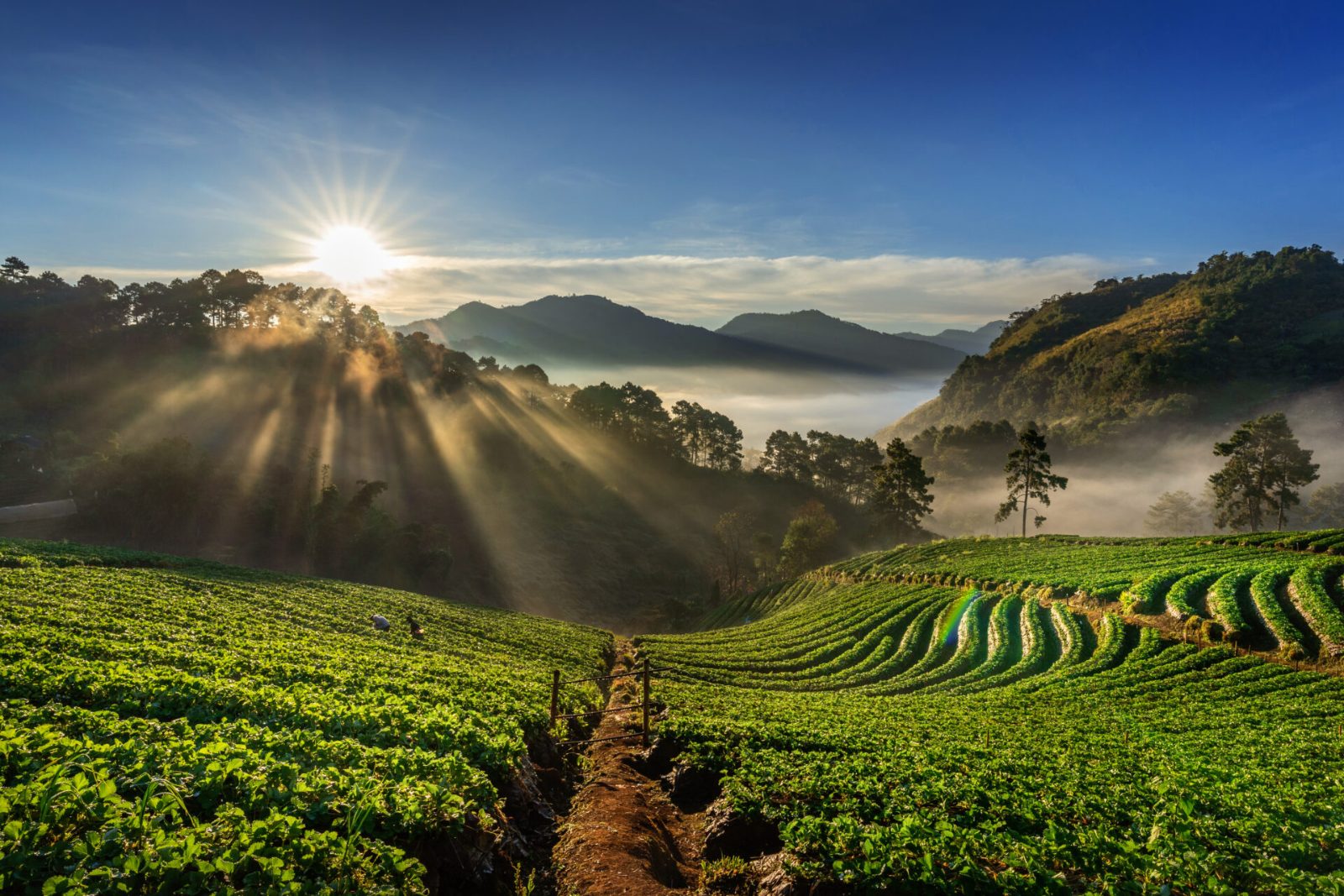
Walk toward the outer edge of the property where the rice paddies meet the local vegetation. These thai cooking class chiang mai farm tours locations offer expansive views of the rural countryside suitable for wide landscape photography.
Capture the colorful arrangement of fresh chilies, galangal, and garlic laid out on wooden workbenches. Secure your thai cooking class chiang mai farm tickets to gain access to these prep areas before the heat of the day.
Bringing children to a thai cooking class chiang mai farm offers an immersive way to engage with local ingredients and culinary traditions. This farm-to-table experience allows families to explore organic gardens together before preparing meals in an open-air kitchen environment.
The farm terrain includes natural paths and garden rows that are generally unsuitable for strollers, so a carrier is recommended for younger children. Please note that thai cooking class chiang mai farm tours involve navigating uneven ground near harvest areas.
While children of various ages can participate, those aged six and up typically get the most out of the hands-on herb picking and stir-frying process. You may purchase thai cooking class chiang mai farm tickets for older children who are comfortable working near supervised cooking stations.
The cooking areas use traditional heat sources and sharp tools that require constant adult supervision for younger participants. During your thai cooking class chiang mai farm tour, focus on having children help with washing vegetables and mixing sauces to keep them safely away from active burners.
The farm provides basic washroom facilities, though parents should be prepared for rustic conditions common in agricultural settings. Confirm your booking details at https://thaifarmcooking.net to ensure you have adequate time to arrive within the 09:00–15:30 window.
Visitors participating in a thai cooking class chiang mai farm often enjoy fresh, garden-to-table meals directly on-site as part of their experience. Those seeking additional thai cooking class chiang mai farm tours can find refreshing local beverages and light refreshments nearby.
Features seasonal ingredients harvested directly from the organic gardens, included in your standard session. This provides an authentic taste of local curries and stir-fries prepared by participants.
Located near the main garden area, offering house-made lemongrass and butterfly pea teas. It serves as a perfect spot for a quick break between thai cooking class chiang mai farm tour modules.
Found a short walk from the entrance, these stalls offer traditional northern snacks like khao soi and grilled skewers. These providers are ideal for securing thai cooking class chiang mai farm tickets or grabbing a quick snack before your class begins.
Everything you need to know for your journey
The Thai Cooking Class is open daily from 09:00–21:00. Please arrive for your scheduled session within the 09:00–15:30 arrival window.
The standard half-day cooking class fee is 1,000 THB per person. This covers your ingredients and expert instruction at the Thai Cooking Class.
Most classes are structured as half-day or full-day experiences, typically concluding by late afternoon. Plan for a full day of immersion when booking your thai cooking class chiang mai farm.
Yes, families are welcome at the Thai Cooking Class. It is an excellent way for children to learn about organic farming and traditional recipes.
Autumn and winter are ideal, though booking your thai cooking class chiang mai farm tickets early is recommended due to popularity.
Yes, most sessions at the Thai Cooking Class include hotel pickup and drop-off via air-conditioned minivan.
Yes, small daypacks are allowed. You can store your personal belongings at the farm during your thai cooking class chiang mai farm session.
Prohibited items include sharp objects, alcohol, and drones to ensure a safe environment at the Thai Cooking Class.
Wear comfortable, modest clothes and closed-toe shoes. This ensures you are prepared for both the farm walk and the kitchen work.
Cancellation policies vary by provider; ensure you check the terms upon booking your thai cooking class chiang mai farm.
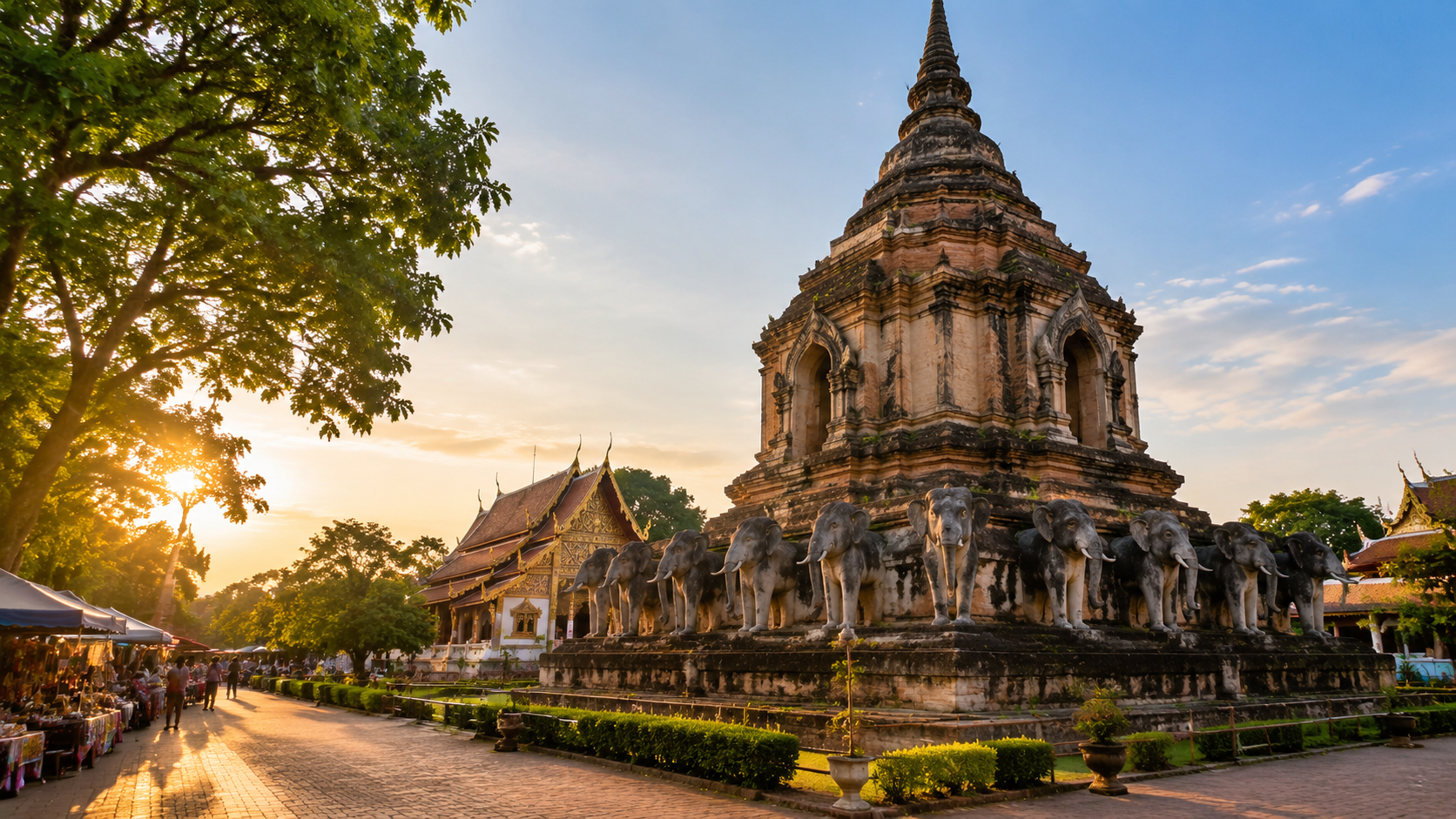
Yes, there are many temples and cultural sites in Chiang Mai, such as Wat Chiang Man, easily accessible after your visit to the Thai Cooking Class.
This historic site is the oldest temple in the city walls. It features an ancient chedi supported by stone elephants.
Intimate stay near traditional landmarks and central meeting points.
Upscale riverside resorts offering scenic mountain views.
Modern district known for trendy cafes and convenient access to transit.
Affordable lodging options suitable for students and solo travelers.
Join thousands of happy travelers who have discovered this incredible experience
Book Your Experience Now